
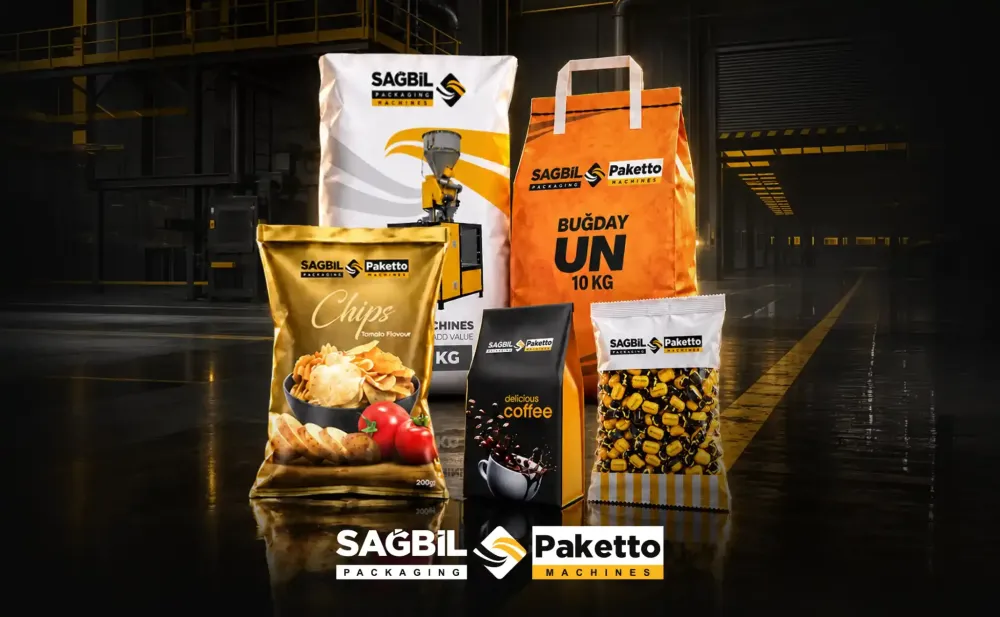
Many of the products we see on supermarket shelves are packaged with automatic filling systems. Products packaged by filling form a wide group, from powders such as flour and sugar to granular products such as pulses and nuts. In this article, you can find out which products are packaged by filling and which machines are used for them.
What is filling and packaging?
Filling and packaging is the process of measuring a product in a set quantity, filling it into a package and closing the package. In fully automatic food filling systems, product feeding, measuring, filling and sealing are carried out on a single line with reduced operator intervention.
What are the stages of filling and packaging?
- Feeding the product into the hopper
- Measuring the product by weight
- Filling the product into the package
- Closing the package
- Preparing the packs for shipment
Which products are packaged by filling?
Products packaged by filling are grouped by their physical structure into powders, granules and grains. A different filling system is used for each group. In addition to food, industrial products such as powder detergent and building chemicals can also be packaged by filling.
Which product groups are packaged by filling?
- Powders: Flour, semolina, starch, milk powder, powdered sugar
- Granules: Salt, crystal sugar, coffee
- Grains: Pulses, rice, bulgur
- Fragile products: Pasta, chips, nuts
- Industrial products: Powder detergent, gypsum
How are powder products filled?
Powder products such as flour and spices have a fine structure and can easily create dust. An auger (screw) filling system is used for these products. The auger conveys the product into the package in a controlled way, ensuring precise weights and reducing product loss.
Which products are packaged with auger filling?
- Flour and semolina
- Ground spices
- Milk powder and starch
- Turkish coffee
How are granular products filled?
Volumetric filling is preferred for free-flowing granular products such as pulses and rice, while weigher filling is preferred for products that require precise weighing, such as nuts. The right filling system ensures that products packaged by filling have the same weight in every pack.
Which system is used for which granular product?
- Pulses and rice: Volumetric filling
- Crystal sugar and salt: Volumetric filling
- Nuts and chips: Weigher filling
- Pasta: Weigher filling
Why is fully automatic food filling preferred?
Fully automatic food filling systems provide speed and consistent pack quality in high-capacity production. Since all operations from product feeding to pack output are automated, labour requirements and product loss are reduced.
What are the advantages of fully automatic food filling?
- High packaging speed
- Same weight in every pack
- Less product loss
- Hygienic production
- Fewer operators needed
Which products is a vertical filling machine used for?
A vertical filling machine is a system that forms bags from roll film, fills them with the product and seals the pack. Used with the right filling unit, a vertical filling machine is suitable for most products packaged by filling.
Which products are packaged with a vertical filling machine?
- Flour, sugar and spices
- Pulses and rice
- Tea and coffee
- Nuts and chips
- Pasta