
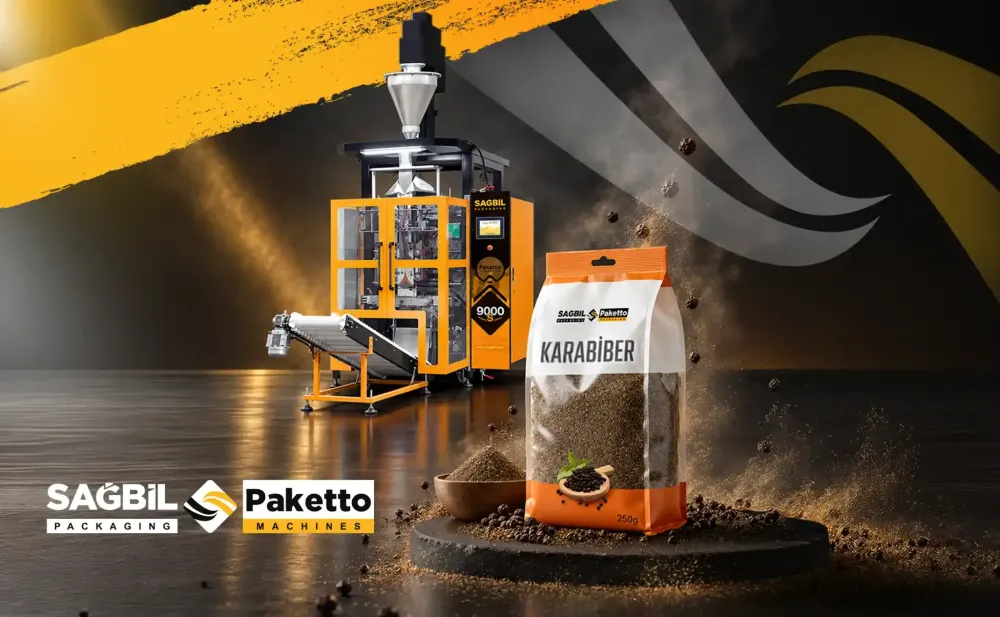
Packing and packaging are two different concepts used during the preparation, protection, and delivery of products to consumers. Although these terms are sometimes used interchangeably in everyday language, there are certain differences between them in terms of process and purpose. Especially in the food and manufacturing industries, packaging systems help place products into packages in specified quantities and prepare them for distribution.
What Is Packing?
Packing is the process of filling or placing a product into a package in a specified quantity and preparing it as a finished pack. This process can be carried out manually or with machinery, depending on production capacity. Today, packaging machines help package different products quickly and consistently.
What Are the Stages of the Packing Process?
-
Preparing the product in the specified quantity
-
Preparing the packaging for filling
-
Transferring the product into the package
-
Sealing the package
-
Removing finished packages from the production line
What Is Packaging?
Packaging is the process of wrapping or enclosing a product with suitable packaging materials to protect it from external factors and make it suitable for transportation. Depending on the characteristics of the product, materials such as paper, plastic, cardboard, or other packaging materials may be used.
What Are the Main Purposes of Packaging?
-
Protecting the product from external factors
-
Making transportation and storage easier
-
Preserving the physical integrity of the product
-
Creating suitable outer packaging for the product
-
Improving product presentation
What Is the Main Difference Between Packing and Packaging?
Packing mainly refers to placing a product into a package in a specified quantity and preparing it as a finished pack, while packaging refers to protecting the product with suitable materials and creating its outer structure. In practice, however, these two processes are often considered parts of the same production process.
Differences Between Packing and Packaging
-
Packing involves filling a product into a package.
-
Packaging refers to creating an outer structure designed to protect the product.
-
Packing may include filling and sealing operations.
-
Packaging focuses on the materials used and their protective properties.
-
Both processes can be carried out together on a production line.
What Operations Does a Packaging Machine Perform?
A packaging machine can perform operations such as filling a package with a specified quantity of product and sealing the package. The operating method of the machine may vary depending on the characteristics of the product being packaged and the type of packaging used.
Operations Performed by Packaging Machines
-
Product dosing
-
Package forming
-
Product filling
-
Package sealing
-
Package cutting
-
Transferring products to the output line
What Products Are Packaging Machines Used For?
Packaging machines can be used for a wide range of products, from food products to various industrial goods. The physical characteristics of the product, package weight, and packaging type are important factors when selecting a machine.
Some Common Applications
-
Flour
-
Legumes
-
Sugar
-
Spices
-
Tea
-
Coffee
-
Nuts
-
Pasta
-
Powder and granular products
How Do Packaging Systems Work?
Packaging systems carry out a series of operations in which the product is received from the production line, transferred into the package in a specified quantity, and then sealed. The level of automation may vary according to production capacity and the requirements of the business.
Main Components of Packaging Systems
-
Product feeding section
-
Dosing system
-
Filling unit
-
Package forming section
-
Sealing or welding unit
-
Product output section
Can Packing and Packaging Be Performed Together?
Packing and packaging can be performed together as complementary processes on a production line. Automatic packaging machines, in particular, can carry out multiple operations within a single system, from product filling to package sealing.
Features of Integrated Systems
-
Filling and packaging processes can be automated.
-
Different package weights can be accommodated.
-
Various types of packaging materials can be used.
-
Additional equipment can be integrated into the production line.
-
The packaging process can be made more organized and consistent.
What Should Be Considered When Choosing a Packaging Machine?
When selecting a packaging machine, the characteristics of the product, packaging type, package weight, and production capacity should be evaluated together. Choosing packaging systems that match production requirements helps establish a workflow suited to the needs of the operation.
Key Criteria for Selecting a Packaging Machine
-
Characteristics of the product to be packaged
-
Required package weight
-
Packaging material
-
Production capacity
-
Package dimensions
-
Level of automation
-
Filling method
-
Integration with the production line