
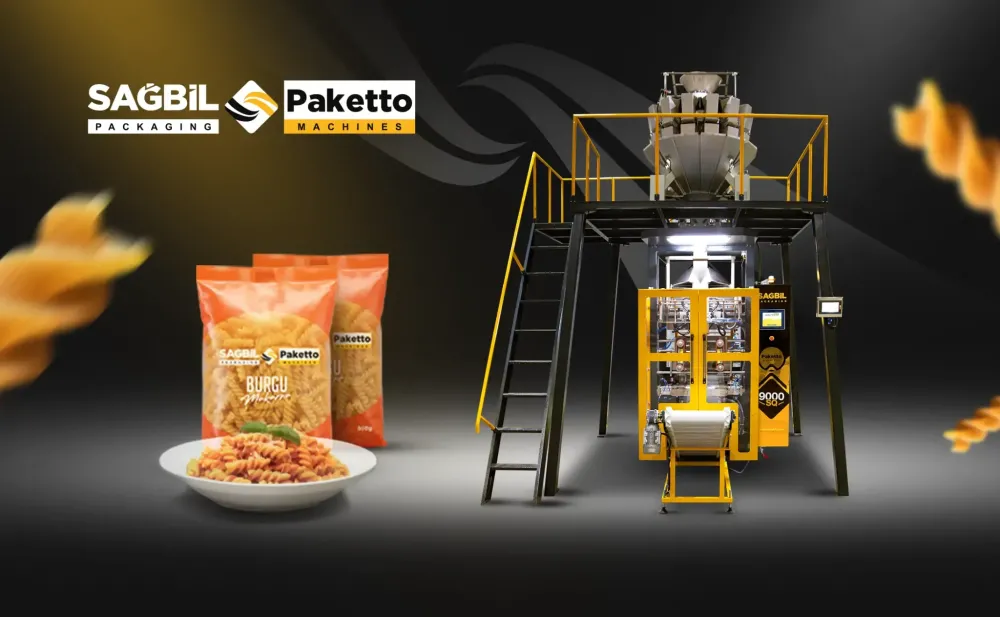
Food packaging is the process of filling food and beverage products into suitable packages in specified quantities and sealing the package. This process can be carried out with different types of packaging to make the product easier to transport and store. A food packaging machine selected according to the structure of the product helps the filling and packaging operations to be carried out at the specified measurements.
How is food packaging done?
The food packaging process is first planned according to the characteristics of the product and the type of packaging to be used. The product is transferred into the package in the specified quantity by a suitable filling machine. The package is then formed and sealed. Depending on the features of the system used, some or all of the operations can be performed automatically.
Stages of food packaging
- Feeding the product into the machine
- Preparing the packaging
- Filling the product in the specified quantity
- Forming the package
- Sealing the package
- Removing the packages from the production line
What does a food packaging machine do?
A food packaging machine is a machine system that enables different food products to be packaged at specified weights. Depending on whether the product is powder, granular or grain-shaped, the food packaging machine used may have different filling technologies.
Which products are food packaging machines used for?
Packaging machines can be used to package a wide range of food products. When choosing a machine, the physical properties of the product and the type of packaging are taken into account.
- Flour
- Pulses
- Sugar
- Spices
- Tea
- Coffee
- Nuts
- Bulgur
- Pasta
What are the types of food packaging machines?
The types of food packaging machines vary depending on the packaging and filling method used. Vertical packaging, paper packaging filling and different bag systems are among the options used in the food industry.
Packaging systems used
- Vertical filling and packaging machines
- Paper packaging filling systems
- Bag packaging systems
- Automatic filling systems
- Multi-packaging systems
How does fully automatic food filling work?
Fully automatic food filling refers to systems that automatically transfer the product into the package in the specified quantity. In addition to filling, forming and sealing the package can also be included in automatic systems. In this way, operations on the production line can be carried out in a more orderly manner.
Which operations are performed in fully automatic filling systems?
In fully automatic food filling systems, different dosing methods can be used depending on the characteristics of the product.
- Feeding the product into the system
- Dosing
- Filling into the package
- Forming the bag
- Sealing the package
- Transferring the packages to the output line
What should be considered when choosing a packaging machine?
When choosing a packaging machine, looking only at the product type is not enough. The product weight, packaging type, production capacity and filling method should also be evaluated. The filling machine to be used should also be determined in line with these characteristics.
Features considered when choosing a machine
- Physical structure of the product
- Package weight
- Packaging material
- Package dimensions
- Production capacity
- Level of automation
- Filling method
- Integration into the production line
Why is food packaging important?
Food packaging ensures that products are packaged at specified weights and that the production process runs in an orderly way. The food packaging machine and other packaging machines used can be selected according to the production capacity of the business and the characteristics of the product.
Benefits of food packaging
- Packaging can be done at standard weights.
- Filling operations can be made more orderly.
- Different types of packaging can be used.
- Systems suited to the production capacity can be chosen.
- Filling and packaging operations can be automated.