
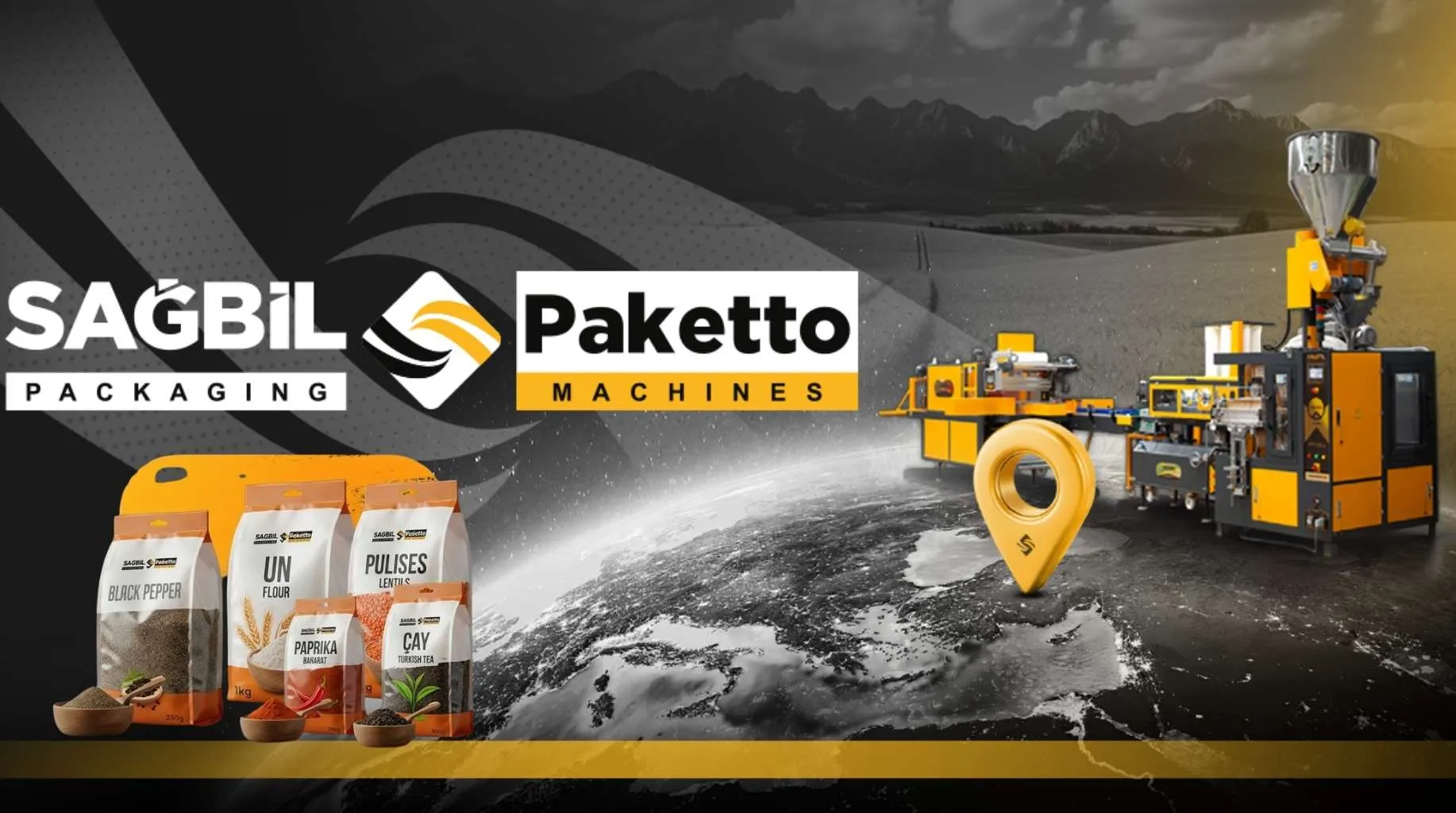
5 Key Differences: Semi-Automatic Packaging Machine or Fully Automatic?
When modernizing your production line, the most vital decision you will make is correctly determining your automation level. So, is a semi-automatic packaging machine more suitable for your facility, or a fully automatic system? This decision directly dictates not only your current budget but also your business's growth capacity and market competitiveness for the next decade.
Especially for Small and Medium-Sized Enterprises (SMEs), selecting machinery is an irreversible investment step. An incorrect capacity estimation leads either to an expensive machine sitting idle or an inadequate production line failing to meet orders. At Sagbil Packaging Machines, armed with the experience of over 1,000 successful projects, we definitively resolve this industrial dilemma.
In this comprehensive guide, we compare both technologies in detail to ensure you make the most profitable investment aligned with your production volume.
Table of Contents
-
What is a Semi-Automatic Packaging Machine?
-
What is a Fully Automatic Packaging Machine?
-
Capacity and Needs Analysis for SMEs
-
Return on Investment (ROI) and Labor Costs
-
Sagbil's Automation Solutions (Paketto Series)
-
Frequently Asked Questions (FAQ)
1. What is a Semi-Automatic Packaging Machine?
A semi-automatic packaging machine is a hybrid automation solution that merges human labor with machine precision. In these systems, the weighing and filling of the product are flawlessly executed by the machine with ±1% precision, while the feeding of the packaging into the machine or removing it from the line is performed by an operator.
It is an impeccable starting point, particularly for boutique manufacturers transitioning to automation, handling variable product groups, or operating on a restricted budget.
For instance, the Sagbil PAKETTO 2020 Series fills 1 kg, 2 kg, and 5 kg ready-made kraft paper bags at a capacity of up to 18 units per minute. For large-volume and heavy sacks (5 kg - 10 kg), the PAKETTO 1010 (Manual & Auto Filling with Belt Stitching) provides ultimate production flexibility via ergonomic pedal control.
2. What is a Fully Automatic Packaging Machine?
A fully automatic packaging machine represents an advanced technological system that completely eliminates human intervention. It autonomously manages the entire process, from the raw material entering the hopper to the package being sealed and ready for shipment.
These machines are an indisputable necessity for facilities that produce at high capacities and where speed, hygiene, and standardization are mandatory. In Vertical Form Fill Seal (VFFS) lines, the package is formed from roll stock film, filled, and hermetically sealed seamlessly.
If you intend to dominate industrial competition, systems reaching up to 70 packages per minute (6 tons per hour) like the Sagbil Paketto 8070LDS (Linear Automatic Series), or the flexible PAKETTO 9000A vertical filling series, are destined to be the beating heart of your factory.
3. Capacity and Needs Analysis for SMEs
If you are a small to medium-sized manufacturer, you must act purely data-driven, not emotionally, when selecting machinery. Answer these critical questions to determine your capacity needs:
-
Daily Order Volume: If you are producing fewer than 5,000 packages a day, a semi-automatic packaging machine will more than satisfy your needs. However, if your market share demands 20,000 packages or more daily, fully automatic lines are mandatory.
-
Product Diversity: If you pack 5 different products daily (e.g., both flour and tea) and frequently change packaging/weights, semi-automatic systems boast much shorter changeover times. Fully automatic hybrid systems (like PAKETTO 9000S) also offer this flexibility, but demand a higher initial investment.
-
Facility Footprint: Fully automatic lines (including shrink wrapping and baling units) require a substantial physical area and strict logistical organization within your facility.
4. Return on Investment (ROI) and Labor Costs
Return on Investment (ROI) calculates how swiftly a machine amortizes its own cost. According to global industrial automation data, labor costs increase significantly every year.
The initial purchasing cost of semi-automatic packaging machine models is exceptionally low. However, it requires the continuous presence of one or two operators at the head of the line.
Conversely, fully automatic packaging machine systems require a more substantial budget upfront. Yet, they sharply slash labor costs, eradicate product giveaway with ±1% filling precision, and amortize themselves in a brief period of 1-2 years thanks to their 24/7 uninterrupted production capability.
5. Sagbil's Automation Solutions (Paketto Series)
Sagbil Packaging Machines provides scalable solutions tailored to your business's current status and future vision:
-
For Starters: PAKETTO 2020YDS (Semi-Automatic Paper Filling)
-
For Heavy Duty & SMEs: PAKETTO 1010 (Manual/Auto Filling with Belt Stitching)
-
For High-Capacity Exporters: Paketto 8070LDS (Linear Fully Auto Paper Filling) and PAKETTO 9000SQ (Premium Quadro Vertical Filling).
For proper engineering analysis in machine selection, contact our experts via our contact page to request a free capacity report exclusively for your factory.
For more content, please visit our Sağbil News page.
For more information about our company, please visit our contact information.
Frequently Asked Questions (FAQ)
1. How many packages can I produce daily with a semi-automatic packaging machine?
This depends heavily on the operator's speed and the target weight. However, with advanced semi-automatic systems like the Sagbil PAKETTO 2020 series, you can produce an average of 15-18 packages per minute, culminating in 7,000 to 8,500 packages per day (in an 8-hour shift).
2. How does switching to fully automatic machines affect product giveaway?
Our fully automatic lines eradicate errors caused by human fatigue. Thanks to loadcell weighers and premium PLC software, the filling precision is strictly under ±1%. On a monthly basis, this prevents tons of product giveaway (waste).
3. What is the best packaging machine for SMEs?
If your capacity is expanding but you lack the budget for a fully integrated automatic line, hybrid lines or systems that can be automated later—such as the PAKETTO 1010 integrated with a belt stitching machine—represent the safest entry point for SMEs.
4. Is the maintenance of the machines difficult?
No. Sagbil systems possess modular structures that can be easily dismantled without tools. Because AISI 304 stainless steel is used extensively, cleaning and periodic maintenance can be performed comfortably by your operators with minimal downtime.
5. Can I convert a semi-automatic machine to fully automatic later?
Depending on the specific models, you can elevate the automation level of semi-automatic paper filling lines (for instance, lines with stitching machines) by integrating end-of-line shrink wrapping or baling units in the future.