
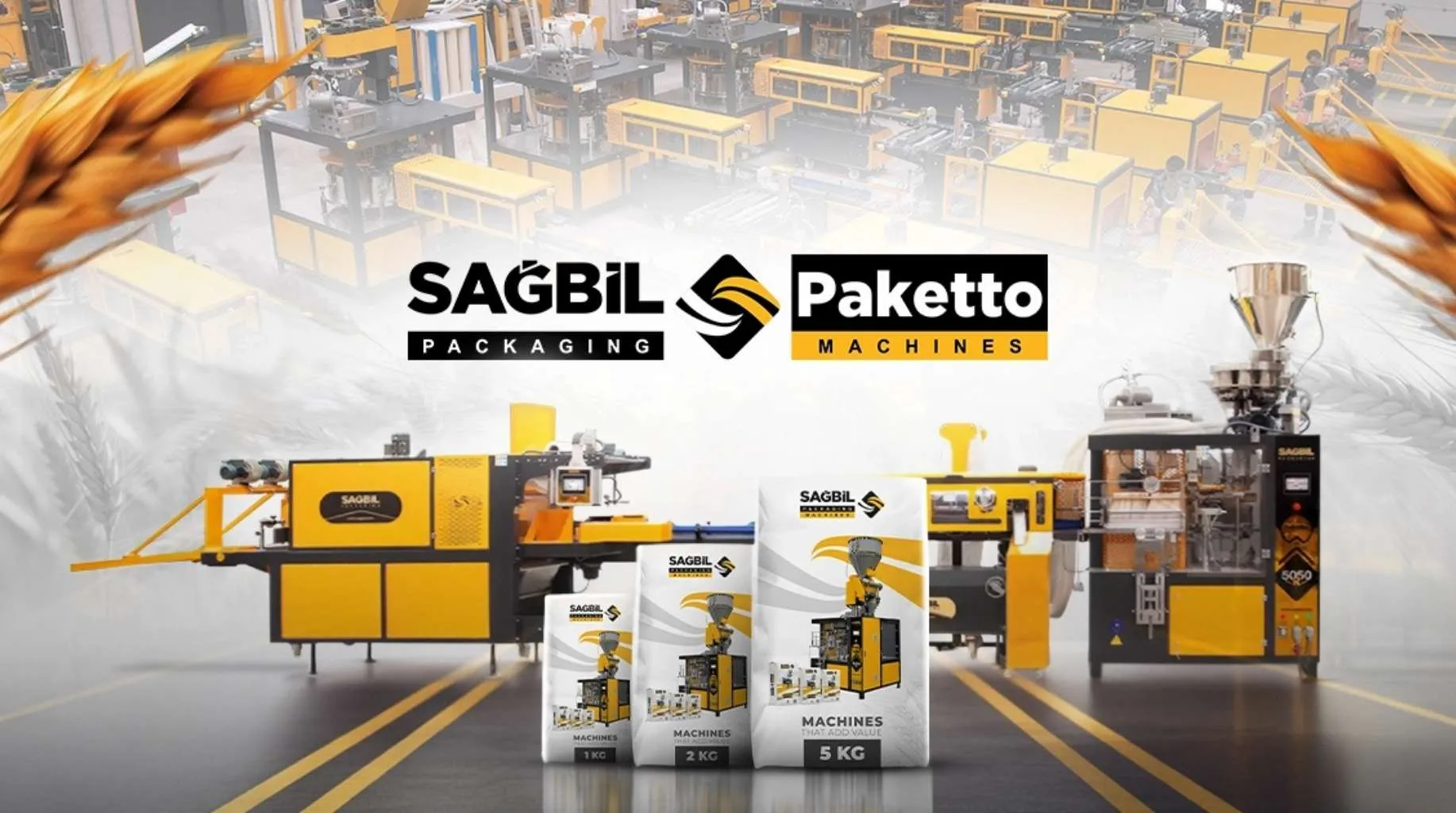
Flour Filling and Packaging Machines: Industrial Speed, Hermetic Sealing, and Zero Waste
Summary: Flour filling and packaging machines are fully automatic industrial systems that utilize vertical auger filler technology and integrated dust extraction (vacuum) units to package fine, highly dusty products like flour into kraft paper bags or roll-stock pouches with a strict ±1% weight accuracy.
In flour production—the cornerstone of the global food market—packaging is the ultimate stage that determines profitability and product shelf life. By nature, flour is a non-free-flowing product with a high tendency to generate airborne dust. This specific physical structure renders standard filling systems obsolete. Weight deviations and faulty seals on the production line result in tons of product giveaway and massive financial losses every year.
At Sagbil Packaging Machines, armed with the experience of over 1,000 successful projects worldwide, we inject direct efficiency and reliability into production lines. The flour filling and packaging machines we engineer redefine industry standards by merging high-speed operation with absolute hygiene.
What is a Flour Filling and Packaging Machine?
A flour filling and packaging machine is an integrated automation solution designed to precisely weigh flour using vertical auger filler systems, push the product into the packaging without generating dust, and subsequently seal the bag hermetically using hotmelt glue, stitching, or heat jaws. Sagbil technology preserves the physical integrity of your product while optimizing packaging material costs.
Citable Insight: "In flour packaging lines, an integrated dust extraction system is not an option; it is an absolute necessity for 100% seal integrity, food safety, and prolonged machine lifespan."
Industry Forum Debate: The Devastating Impact of Flour Dust on Seal Integrity
The most critical problem food engineers and facility managers seek solutions for on technical forums is the following:
"When packaging fine-grained products like flour at high speeds, intense dusting occurs. This airborne dust settles on the hotmelt gluing area of paper bags or the heat sealing jaws of plastic pouches. Because of this dust layer, the packaging cannot weld (seal) completely. The product is exposed to air and humidity, causing packages to burst during transit or on the retail shelf. How do we overcome this seal integrity crisis without throttling our production speed?"
Ordinary machines cannot mechanically extract this dust, leading to the total collapse of the package's hermetic structure.
The Sagbil Engineering Solution: Sagbil flour filling lines eradicate this crisis at the source. "Integrated Dust Extraction (Vacuum) Systems" are standard across our lines, specifically designed to capture the airborne dust generated during the filling of powdery products. While the Vertical Auger Filler unit pushes the flour into the packaging, the vacuum channels instantly extract the dust. The mouth of the packaging remains completely sterile, ensuring that heat jaws or gluing units clamp down on a pristine surface, guaranteeing a 100% airtight seal.
Sagbil Paketto Solutions Tailored to Your Needs
We have developed two primary production lines based on your facility's capacity requirements and target packaging:
1. Paper Bag Flour Filling Lines (1 kg - 10 kg)
Eco-friendly kraft bags allow the flour to breathe while displaying a premium, upright stance on the shelf.
-
Paketto 8070LDS (Linear Automatic Series): Designed for high-capacity flour mills. Utilizing a loadcell weighing system, it offers filling precision of under 1%, strictly preventing product waste.
-
Paketto 5050K and 3035K Series: These lines automate the entire shipment process by operating integrated with shrink wrapping (VDS) or baling (VDB) units immediately after auger filling.
2. Vertical Form Fill Seal (VFFS) Machines
These are high-speed systems that transform a flat roll of plastic/nylon film into a finished pouch in seconds.
-
PAKETTO 9000A and 9000SQ: Operating with the Vertical Auger (VD) filling system specifically for flour. The 9000SQ series, in particular, is capable of producing the aesthetic, four-corner gusseted "Quadro bag" for premium brands.
For more content, please visit our Sağbil News page.
For more information about our company, please visit our contact information.
People Also Ask (PAA)
How many bags per minute do flour packaging machines produce?
Production speed depends on the packaging format and the fill weight. Our Sagbil PAKETTO 9000 series VFFS machines can achieve continuous production at high speeds of up to 70 packages per minute.
Can 1 kg and 5 kg of flour be packaged on the exact same machine?
Yes. Thanks to our advanced PLC control screens (ABB, Panasonic) and quick-change modular forming collar sets, you can transition between different grammages in a matter of minutes on a single platform.
How are food safety standards maintained?
All surfaces of our machines that come into contact with the product are manufactured from corrosion-resistant AISI 304 stainless steel. With a tool-free dismountable design, line cleaning (CIP) is exceptionally easy and compliant with global food norms.
Frequently Asked Questions (FAQ)
1. Why is an auger filler mandatory for flour packaging?
Flour is a non-free-flowing powder that tends to bridge and compress. Weigher buckets or volumetric cups cannot measure flour accurately. A servo-motor-driven auger system pushes the flour into the package based on the precise rotation of the screw, sustaining a strict ±1% grammage accuracy.
2. What is your solution for closing heavy flour sacks (10 kg)?
We specifically offer our PAKETTO 1010 series for filling large and heavy bags. After filling, this system utilizes an integrated "belt stitching machine" to sew the mouth of the kraft bag or sack closed, meeting heavy-duty industrial standards.
3. Do you provide end-of-line automation for kraft bag packaging?
Yes. Following the individual filling process, our Paketto 5050K and 3035K series automatically group the packages into multi-packs using shrink film or bundle them into large bales using hotmelt glue, making them immediately ready for logistics.