
Revolutionize Your Production Line with a Pulses Packaging Machine
Pulses (legumes), one of the most strategic and high-volume product groups in the food industry, are sensitive foodstuffs that must be protected on their journey from field to table. The most critical stage that extends the shelf life and determines the brand value of products such as chickpeas, lentils, dry beans, rice, and bulgur is packaging. The heart of a modern production facility undoubtedly beats with a high-performance pulses packaging machine. As Sagbil, we ensure you stay one step ahead of the competition with our fully automatic pulses packaging machine solutions that increase your enterprise's capacity and reduce costs.
Why Should You Use a Professional Pulses Packaging Machine?
Traditional or manual filling methods are far from meeting today's standards of speed, hygiene, and precision. The primary motivation for businesses to invest in a dry pulse packaging machine is to prevent grammage deviations caused by human error and tons of product loss (waste).
The most sought-after pulse filling machine models in the market not only increase production speed but also guarantee the package's shelf stance, sealing integrity, and aesthetics. Sagbil uses precise filling technologies in the production of pulses packaging machines that prevent product breakage. Especially for 1 kg pulse packaging needs, which is the backbone of retail, it maximizes your operational efficiency by reaching speeds of up to 70 packs per minute.
Machine Selection According to Product Type: Volumetric or Weigher?
Not every pulse product has the same physical structure. The correct machine selection must be made according to the flowability of the product you will package, the grain size, and the target grammage precision. The wrong choice causes bottlenecks in production.
1. Weigher Packaging Machines (Focus on Precision)
For products with irregular shapes, different grain sizes, or high unit weights (e.g., large chickpeas, dry beans, kidney beans), the use of a weigher pulses packaging machine is essential. Sagbil's Multihead or Linear Weigher systems precisely weigh the product in buckets before packaging and discharge it into the package. This method reduces grammage error to below ±1%. This is the choice of those who want to zero out waste in professional "pulse packaging" processes.
2. Volumetric Packaging Machines (Focus on Speed)
For free-flowing products with standard grain sizes that are relatively cheaper (e.g., red lentils, rice, bulgur), a volumetric pulses packaging machine is ideal. This system, which measures using adjustable volume cups, reaches very high speeds and is more economical in terms of investment cost.
Industry Forum Agenda: "Product Breakage and Waste Fear"
The topic most heatedly discussed by pulse producers and facility managers in sectoral forums before purchasing a machine is this: "Does the machine break the product while running fast?"
Especially in red lentils or sensitive bean types, hard impacts experienced during the fall from the machine's hopper into the package cause the product to break. Broken product causes dusting inside the package and reduces the market value (quality) of the product. This is a hidden but major "waste" cost for the producer.
The Sagbil Engineering Solution: We know this anxiety and design our machines accordingly. In Sagbil pulse packaging lines, special angled bunkers and "soft drop" technologies are used to prevent the product from hitting metal surfaces hard. Our aim is not only to package fast but also to get the product into the package in the form it came from the field, without damaging it.
The Sagbil Difference: Food Safety and Durability
Sagbil machines are designed with high engineering standards to run uninterruptedly 24/7. However, another criterion as important as speed is food safety. We indisputably use AISI 304 Stainless Steel at every point where the machine contacts food (buckets, forming collar, funnels, vibration pans). In this way, we both ensure hygienic production and guarantee your machine's corrosion resistance against salt and humidity.
For more content, please visit our Sağbil News page.
For more information about our company, please visit our contact information.
People Also Ask (PAA)
Q: How much do pulses packaging machine prices cost? A: Prices vary depending on the filling system you choose (weigher or volumetric), the desired speed capacity, and the level of automation. Fully automatic systems quickly amortize the investment return (ROI) with the savings they provide from labor.
Q: How many units does a 1 kg pulses packaging machine produce per hour? A: Sagbil's high-performance machines can produce between 40 and 70 packs per minute, depending on the product type and density. This means an average of 2,400 to 4,200 packs per hour.
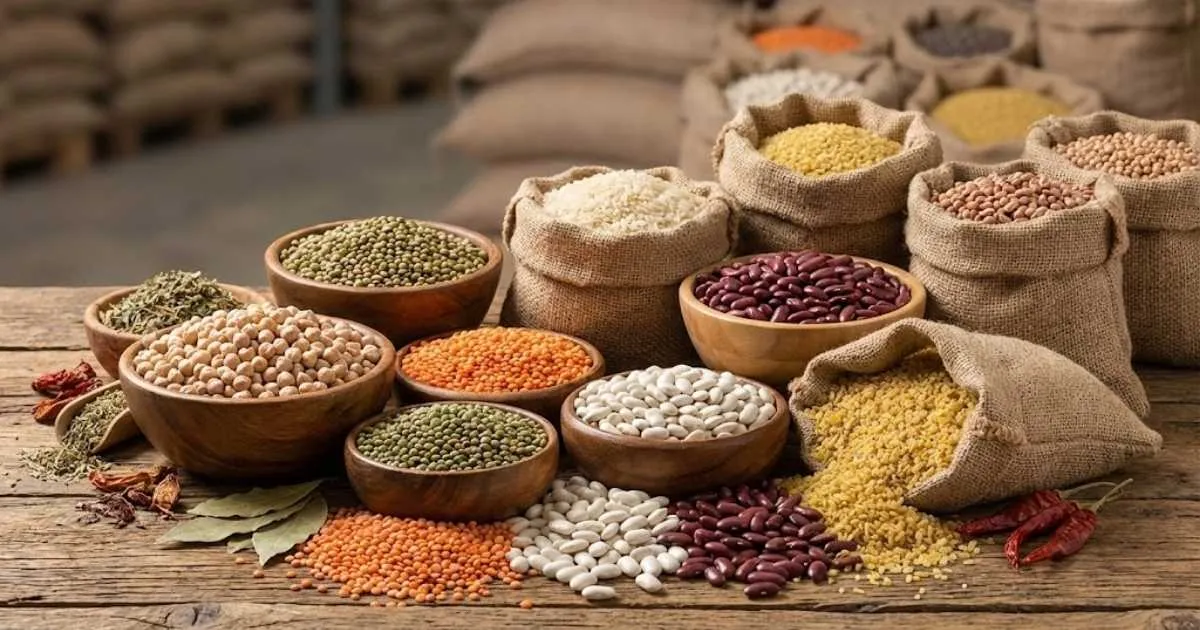
Q: Which pulses can be packaged? A: All dry granular foods such as chickpeas, red and green lentils, dry beans, rice, bulgur, kidney beans, peas, corn, and fava beans can be packaged.
Frequently Asked Questions (FAQ)
1. Does your machine cause breakage (waste) in sensitive products?
No. As mentioned above, Sagbil uses special shock-absorbing surfaces and optimized drop angles for sensitive products like pulses. Your products are not damaged while entering the package.
2. Can I make different package types (Pillow, Stand-up/Block Bottom)?
Yes. Sagbil's advanced VFFS (Vertical Form Fill Seal) models are flexible. By changing the relevant "forming set" (collar), you can produce both standard pillow packs and upright shelf-ready Quadro or Block Bottom pack forms on the same machine.
3. Is the cleaning and maintenance of the machine difficult?
No. Our machines consist of parts suitable for hygiene standards that can be easily dismantled without tools (tool-less). Quick cleaning can be done during product changeovers, and all maintenance times can be tracked via the PLC screen.