
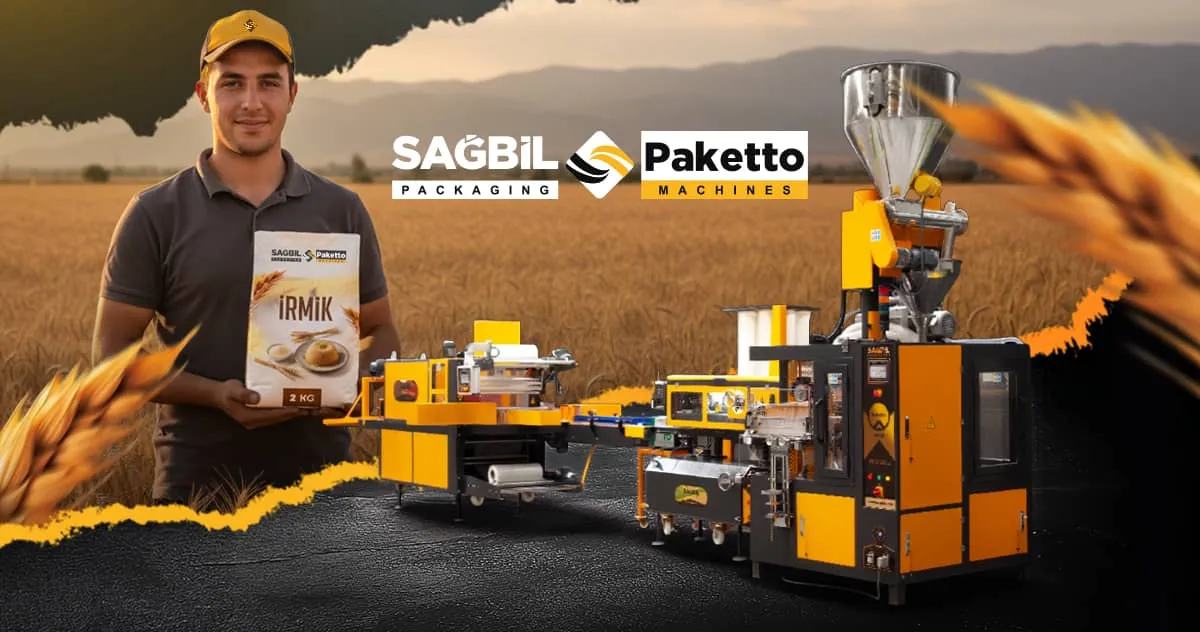
5 Effective Ways to Reduce Waste Rate in Semolina Packaging: Don't Throw Your Profits Away
In food production, especially with high-value and sensitive products like semolina, every gram lost at the end of the production line subtracts directly from your net profit. Having a product that comes out of the mill with great effort go to waste before it can enter the package due to the wrong packaging machine choice or operational errors (waste/fire) is a luxury that industrialists cannot accept.
As Sagbil Packaging Machine, we know the challenges in semolina packaging processes. Dusting, static electricity, and weight deviations are the prime suspects increasing the waste rate. Here are 5 sharp solutions compiled from our field experience to minimize waste and maximize your profitability.
1. Millimetric Precision: Invest in the Right Weighing System
The biggest source of waste in semolina packaging is "overfilling." The logic of "better too much than too little" means giving away tons of product for free annually. The solution is to use precision scale systems optimized for fine-grained products like semolina. Sagbil's multihead weigher systems combine the product in milliseconds to hit the target weight with almost zero error. Every bit of waste saved from overweight returns to your pocket.
2. Solve the Dusting Problem at the Source
Semolina is inherently very prone to dusting. Uncontrolled dust is not just a hygiene problem; it is significant waste. Product that mixes into the air is lost product. Furthermore, this dust sticks to the sealing jaws of the packaging machine, causing the package to leak. Using a semolina filling machine with enclosed filling systems and integrated dust aspiration units reduces dust-related waste by 90%.
3. Package Leakproofness and Jaw Quality
The most painful type of waste is when a product you thought was packaged spills during logistics. This usually stems from inadequate sealing quality. When semolina grains enter the sealing area, low-quality machines cannot fully close this area. The precision temperature-controlled and high-pressure jaw systems used in Sagbil machines guarantee leak-proof packaging even if product gets in between.
Industry Pulse: The "Speed vs. Precision" Dilemma Discussed in Forums
In food producers' forums, the following discussion often occurs between machine operators and factory managers:
Forum Topic: "When we speed up the machine, the weight goes crazy; when we slow it down, production can't keep up."
Producer Comment: "Friends, we use brand X machine on the semolina line. When we push the packages per minute to increase capacity, the scales can't keep up; they either underfill or overfill significantly. We are forced to accept the waste and overfill. Isn't there a machine that is both fast and precise?"
Sagbil Expert Opinion: This is a chronic problem of old-technology machines. With Sagbil food packaging machines featuring current servo motor technology and advanced software, you don't have to choose between speed and precision. You can have both simultaneously.
4. Machine-Material Compatibility
Even the best machine cannot work with the wrong packaging material (film). Films that are not suitable for the weight of the semolina and the speed of the machine, which generate static electricity or tear easily, cause the machine to stop constantly and meters of film/product to go to waste. Sagbil doesn't just sell machines; it also provides consultancy on the most suitable packaging material for your product, reducing the risk of waste.
5. Automation Minimizing Operator Errors
Manual interventions always increase the risk of waste. Making the process fully automatic, from product feeding to casing, prevents spills and scattering caused by human error. Sagbil's machines with PLC control and user-friendly interfaces minimize operational errors.
Waste is Not Destiny
A high waste rate in semolina packaging is not destiny, but the result of wrong technology choices. As Sagbil Packaging Machine, we minimize your waste rate with special solutions we have developed for challenging products like semolina, ensuring every grain enters the package. Invest in the right technology to increase your profitability.
For more content, please visit our Sağbil News page.
For more information about our company, please visit our contact information.
🇬🇧 Frequently Asked Questions (FAQ)
Which filling system is most suitable for semolina packaging?
The ideal systems for semolina are multihead weigher systems or volumetric auger filling systems that combine speed and precision. Sagbil engineers help you make the right choice based on the characteristics of the product.
How do your machines prevent the dusting problem?
Sagbil machines have dust-proof cabins designed specifically for dusty products like semolina and integrated dust suction (aspiration) systems at the filling point.
How much does investing in a packaging machine reduce the waste rate?
In the transition from old technology or manual systems to Sagbil's modern fully automatic systems, a decrease in waste rates between 5% and 15% (depending on the current situation) and a consequent significant cost advantage can be achieved.
🇬🇧 People Also Ask (PAA)
How is semolina packaged?
Semolina is packaged untouched, considering its dusting and flow characteristics, usually using vertical form fill and seal machines (VFFS) with precision scales or auger systems.
What is waste in food packaging?
It is the loss of product and packaging material that comes off the production line but spills, scatters before entering the targeted package, or is scrapped due to incorrect weight or faulty sealing.
What determines packaging machine prices?
Prices vary according to the machine's speed (packages/minute), the filling technology used (scale/auger), the automation level, and the material quality (stainless steel, etc.).